
Tuck Your Babies In!
Make a bed for your plants. We usually do this a week or so before planting. Clear away weeds, loosen the soil, and add organic matter. Whether you live in a warmer climate and have the luxury of planting your seeds directly in the soil, or whether you live in a cooler climate and are planting seedlings that you started indoors, you’ll want to plant into good rich soil.
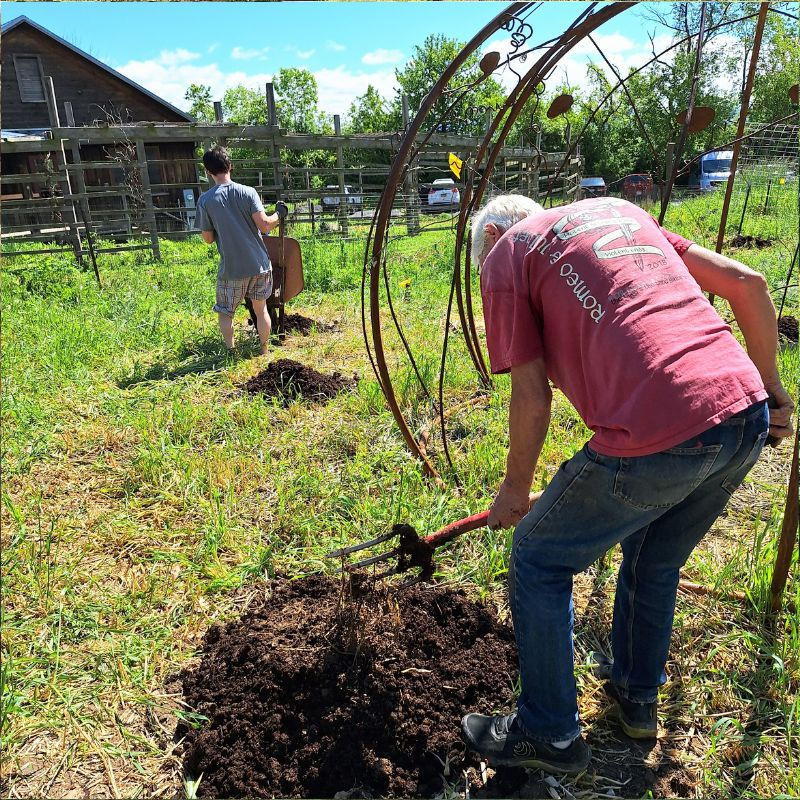
Gourds and other members of the squash family are heavy feeders. It takes a lot of nutrition to grow a gourd! At Gourdlandia, we generally don’t fertilize during the growing season, although many growers do. Instead, we make a nice rich bed for our plants by adding lots of composted manure (two wheelbarrows for each plant!), or whatever organic material we can get our hands on. Anything you can do to make sure the soil is really rich will help.

Your gourd plants are ready to transplant into the garden when they have at least 4 true leaves, and preferably before they send out long vines. Choose a cloudy day, or better yet, the first of several cloudy drizzly days. Your tender, newly-planted baby plants will appreciate not roasting under the hot sun as they get used to their new spot.

Dig a hole in the middle of that nice bed you prepared, about the same size as your pot. Add some ju-ju… a prayer maybe, or best wishes, perhaps some fingernails, or your own Auntie Vi’s power potion for plants. Whatever you've got. Then slip that plant out of the pot and put it in the hole. Fill air pockets with soil, and give it a good long drink of water. Voilà, it’s planted!

We have a lot of cucumber beetles in our area, so we cover our plants with row cover right after planting. Row cover is a lightweight filmy white plant fabric that allows rain in, and keeps bugs out. It also keeps the plants a little bit warmer on cool nights. We take a 5’ x 5’ piece and make a little bonnet over the plant. We tuck the edges in, because those beetles are wily. We remove the row cover about 3-4 weeks later, when the plant is bigger and starting to have flowers. It’s a bit of an ordeal, which I wouldn’t do if I didn’t have cucumber beetles to worry about.

I like to plant some companion plants nearby. Companion plants are buddies for your gourds. They might deter a few pesky insect pests. They can help stabilize the vine so it doesn’t get blown around in wind storms. And when the whole garden is a big green jungle, they can help you find the base of the plant, for watering. Marigolds are really good companions.

We’re still learning about soil, and about growing gourds. Every year we experiment. We check out what other gourd-growers and farmers are doing. We’ve tried nematodes for cucumber beetle management, no-tilling for soil health, clover as a cover crop… none of these worked well for us, (yet!), but we keep experimenting and learning. Make friends with your local Cooperative Extension. Watch your plants closely. Take notes. Keep learning!


Comments